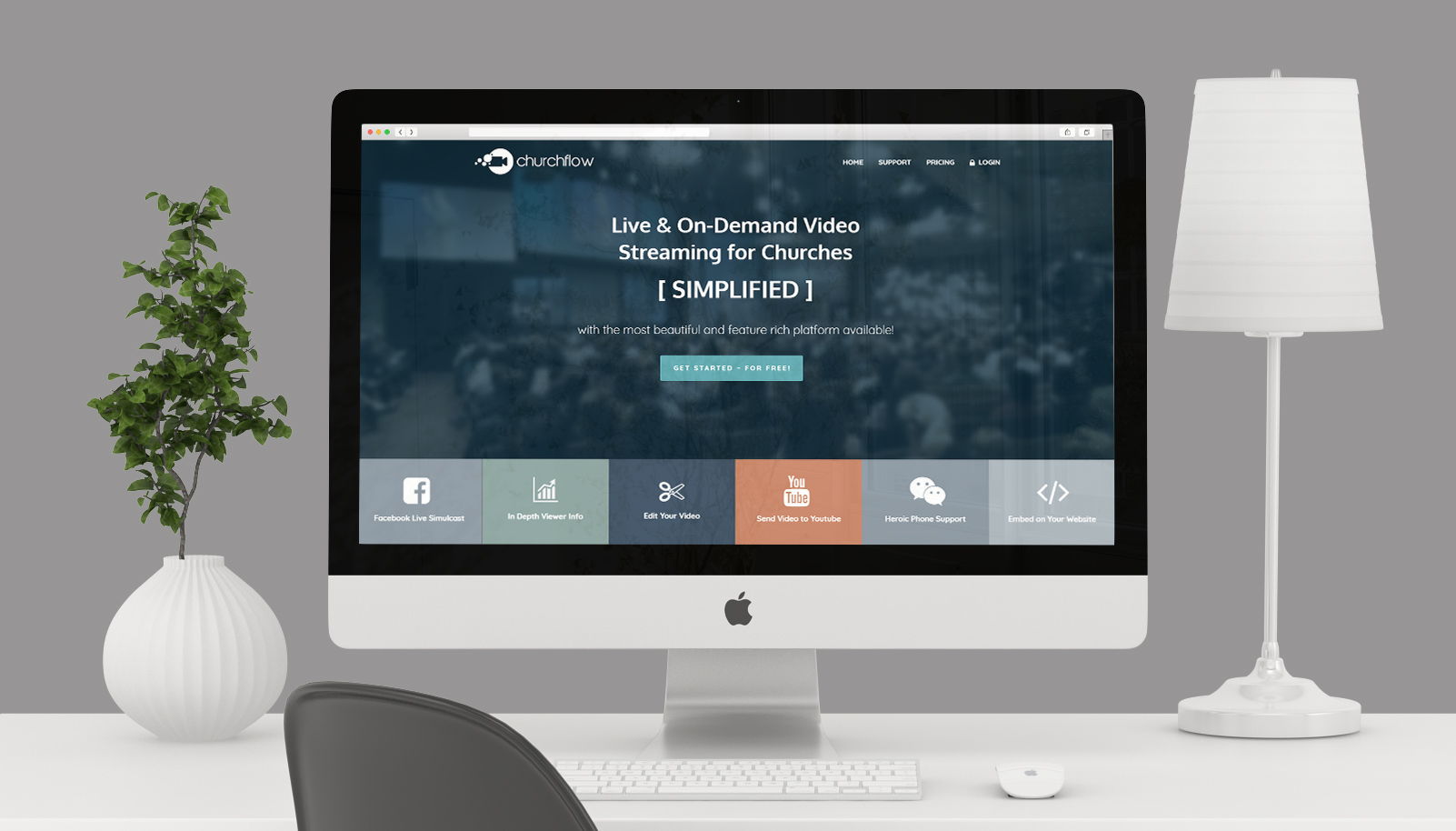
I started Church Flow back in 2007. It’s a live and on-demand streaming platform for churches and organizations to stream their services, meetings, etc. live and on-demand.
The problem(s)
When I created Church Flow churches were paying upwards of $1.5 – $2K per month or more to stream their services live. There was also no way to simulcast their services to any other social media platform. I could handle the UI/UX and server side of things, but I also needed to figure out what stack I would use and find affordable developers.
There was also a problem of most churches not being tech savvy or having the proper equipment needed to broadcast.
Eventually success brought more problems including storage capacity and servicing tens of thousands of simultaneous viewers.
The solution(s)
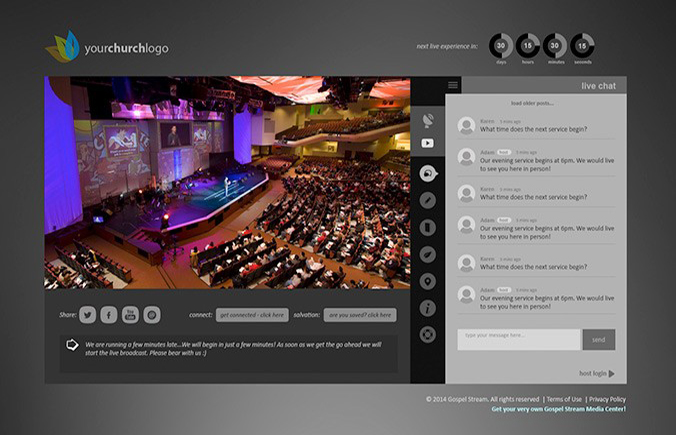
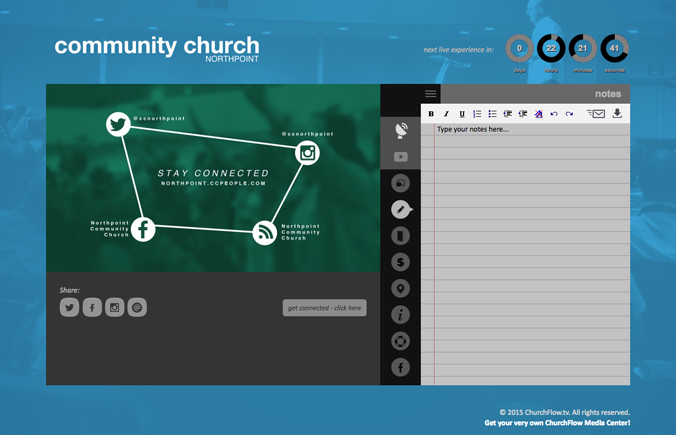
Viewer experience I started by creating the best end-user experience that I could. I did this by bringing on a few of my graphic design clients and letting them use the system at a very low cost. This allowed me to get end-user feedback and create the experience that resonated with the viewers (Initially there was no client dashboard for managing video or any analytics, so I was managing the on-demand video side of things manually)
Computer & Camera Equipment I had already handled or used many of the prosumer cameras on the market at the time, so I was able to consult and make great recommendations for my clients. I would also purchase computer streaming equipment inventory and provide it to the churches. I sometimes used this as a loss leader to get them started as well.
Consulting and Installation Larger churches/organizations would fly me in to do major system installs, when they wanted have multiple cameras, switchers, etc.
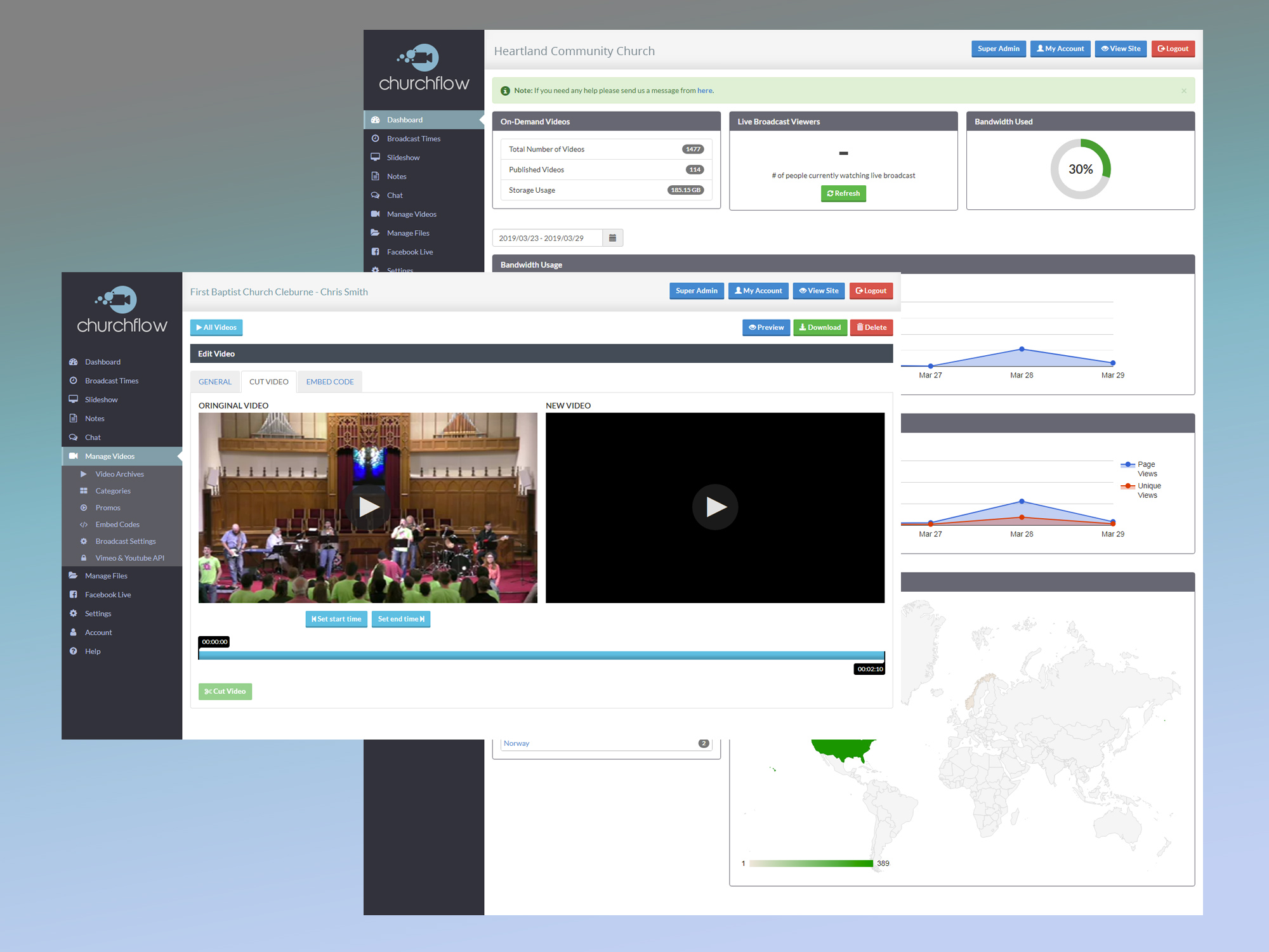
Client admin & analytics I was able to guide my awesome development team to built out a fantastic admin panel that allowed clients to view details analytics, edit/trim their video before publishing, create a full live broadcasting channel by scheduling videos and commercials to play, simulcast to Facebook, Youtube, and Periscope, provide notes for viewers and more.
Upgrading from individual dedicated servers to Amazon Web Services I was able to manage the system by moving clients from server to server manually by managing the live resources. This proved to be cumbersome, so I researched and initiated the switch to AWS. With the proper setup using edge servers for viewers, this allowed auto-scaling and removed even more of my workload.